
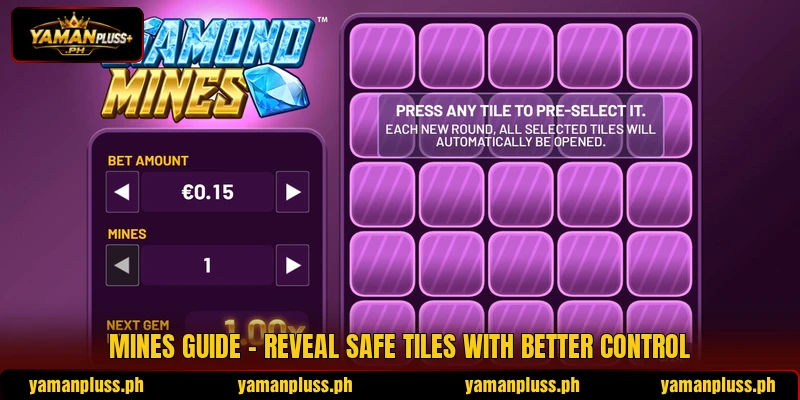
Mines guide gives Filipino members a direct view of grid rules and round choices. At YAMANPLUS, each choice involves hidden tiles, rising multipliers, and possible instant loss. This article helps new and regular players understand actions, outcomes, and round targets.
How the Mines guide operates for Filipino members
A Mines board clearly shows covered spaces with hazards beneath several unknown positions. The Mines guide starts with this idea because each click changes the round value. Safe selections raise the multiplier, while one hazard immediately closes the current attempt.
Members choose a stake, select the hazard total, and open tiles sequentially. Fewer hazards leave more safe spaces, although successful picks add less value overall. More hazards raise rewards faster, but fewer covered positions remain safe during play.
YAMANPLUS usually presents the board as a quick decision game with short rounds. Players carefully view the current return after each safe result before choosing again. The Mines guide therefore emphasizes board control, exact choices, and clear exit points.

Core rules and round framework on each board
The Mines guide divides each round into actions members can follow clearly and easily. Every stage affects the next selection, so choice order deserves close attention throughout.
Using the Mines guide correctly
Open the game page and confirm the board loads properly without display errors. Choose a PHP or USD stake matching the intended single-round length. Confirm the amount before selecting hazards, since changes may reset earlier saved settings.
Next, set the hidden hazard number through the clearly displayed round controls. Low settings create more safe spaces, while high settings move multipliers faster overall. Read every displayed value carefully before pressing the button that starts the board.
After starting, select one covered tile and calmly wait for its result. A safe result keeps the attempt active and updates on-screen returns immediately. Then choose another square or collect the shown amount before any hazard appears.
Setting the mine count
Mine settings directly change safe-space availability and the speed of payout growth. One or two hazards leave many options but create smaller multiplier steps overall. Larger totals make correct tiles more valuable while reducing remaining safe areas.
The Mines guide treats this setting as round design, not a winning guarantee. Members should carefully compare the visible total with their intended number of selections. Three planned picks may suit a different setting than seven planned picks.
Before starting, decide whether the round targets several picks or early collection instead. Then choose a hazard count fitting that plan without random changes later. Stable settings also make separate attempts easier to compare during later review.
Selecting tiles throughout the grid
Covered positions look identical, so appearance never reveals exact hidden hazard locations. Each click should follow a chosen order instead of unsupported visual guesses alone. Common orders include corners, center rows, outer edges, or fixed zigzag patterns.
A fixed order cannot change random outcomes, but it keeps decisions consistent overall. Consistency clearly shows whether members suddenly change plans after each safe result. It also prevents accidental clicks outside the intended tile sequence during play.
Select each square carefully because quick taps can open unintended nearby positions. On smaller screens, pause until the multiplier and board finish updating fully. Clear sequences support accurate actions without claiming control over hidden hazard placement.
Ending sessions at chosen multipliers
Cash-out timing decides whether safe sequences become potential returns or continued exposure. The available amount rises after correct choices and remains clearly visible during play. Members may collect that value instead of selecting another unknown covered square.
Set a target before the first tile, such as collecting after two selections. That target should define the exit clearly without depending on later excitement alone. One example uses PHP 50 stakes and completed collection after two safe tiles.
Never confuse a larger displayed amount with certainty on the next covered position. The Mines guide keeps the choice simple: collect or accept another tile outcome. After collection, verify the displayed result before changing stakes or hazard totals.

Methods for choosing selecting and setting targets
Strong tile methods come from repeatable actions, not unsupported claims about hidden patterns. The Mines guide supports comparisons between choices, hazard levels, and planned collection points.
Reading board shifts carefully
After each safe tile, the board shows a new multiplier and displayed return. Check both values carefully because delayed screens can cause rushed or repeated taps. A stable display confirms the previous selection finished processing correctly on screen.
Watch opened spaces carefully and compare their number with the original target. When targeting three tiles, the third safe result marks the planned decision point. This method keeps round structure visible without predicting any hidden hazard location.
Mobile members should keep the full board visible and avoid overlapping nearby windows. Desktop players can review opened spaces more easily before making another click. Both formats require attention to visible updates, active buttons, and collection amounts.
Comparing low and high risk
Low-hazard rounds contain more safe tiles, yet multiplier gains usually move slowly. High-hazard rounds often change values faster while leaving fewer safe positions available. Neither setting ever removes uncertainty because hidden placement remains completely unknown beforehand.
Compare structures using equal sample stakes, such as PHP 20 or USD 1. One may use two hazards and four picks; another may use six mines. Record visible outcomes carefully to compare pace, never to predict future boards.
Choose a structure matching the intended click count and preferred multiplier movement. Shorter plans may fit more hazards, while longer sequences need more available safe tiles. Treat every board separately because past positions never define the next layout.
Building a consistent tile order
The Mines guide recommends a simple sequence members can remember independently. Start with four corners, then move inward only when more choices remain available. Another option starts from the center and follows one direction toward an edge.
Keep one sequence across several rounds before comparing another tile order carefully. The goal is cleaner clicking, not believing certain positions become safer over time. Frequent changes make accidental selections and target tracking harder to review later.
Use identical hazard totals and exit points while evaluating different tile orders carefully. This keeps comparisons focused on usability instead of unnecessary mixed rule changes. Select the clearest order for the device used most often during play.

Conclusion
Mines guide gives members clear structure for hazards, tile choices, multipliers, and collection timing. At YAMANPLUS, players can carefully apply these steps while checking every displayed result. Register, open the game, choose a round plan, and good luck with every selection.